- Ambient Temperature: Roughly 400°F at the floor, rising to 1,200°F near the ceiling.
- Visibility: Zero. You are blind, navigating by touch and the digital glow of the TIC screen.
- Tactical Objective: Primary search of Apartment 4B.
The roof was reported as "spongy" over the radio - firefighter speak for "about to collapse." Every instinct screams self-preservation, but training overrides instinct. I performed a standard right-hand search pattern, keeping one hand on the wall to maintain orientation. The heat wasn't just hot; it was radiant energy penetrating the thermal layers of my gear. My skin temperature was rising, heart rate pushing 160 BPM. This is purely physiological; the body struggles to thermoregulate in a convection oven. Then, I breached the door to the back bedroom of 4B with my Halligan bar.
The Thermal Anomaly: A defy-physics Event
According to the laws of thermodynamics, heat seeks equilibrium. If a room is burning, the temperature should be uniform or gradient based on height. What happened next violated every fire behavior model I have ever studied. Upon entering the bedroom, the auditory sensory input - the roaring sound of the "rollover" (fire gases igniting across the ceiling) - ceased instantly. It was not a gradual fade; it was an acoustic vacuum. Simultaneously, my tactical awareness shifted from extreme heat stress to an immediate, chilling drop in ambient temperature.
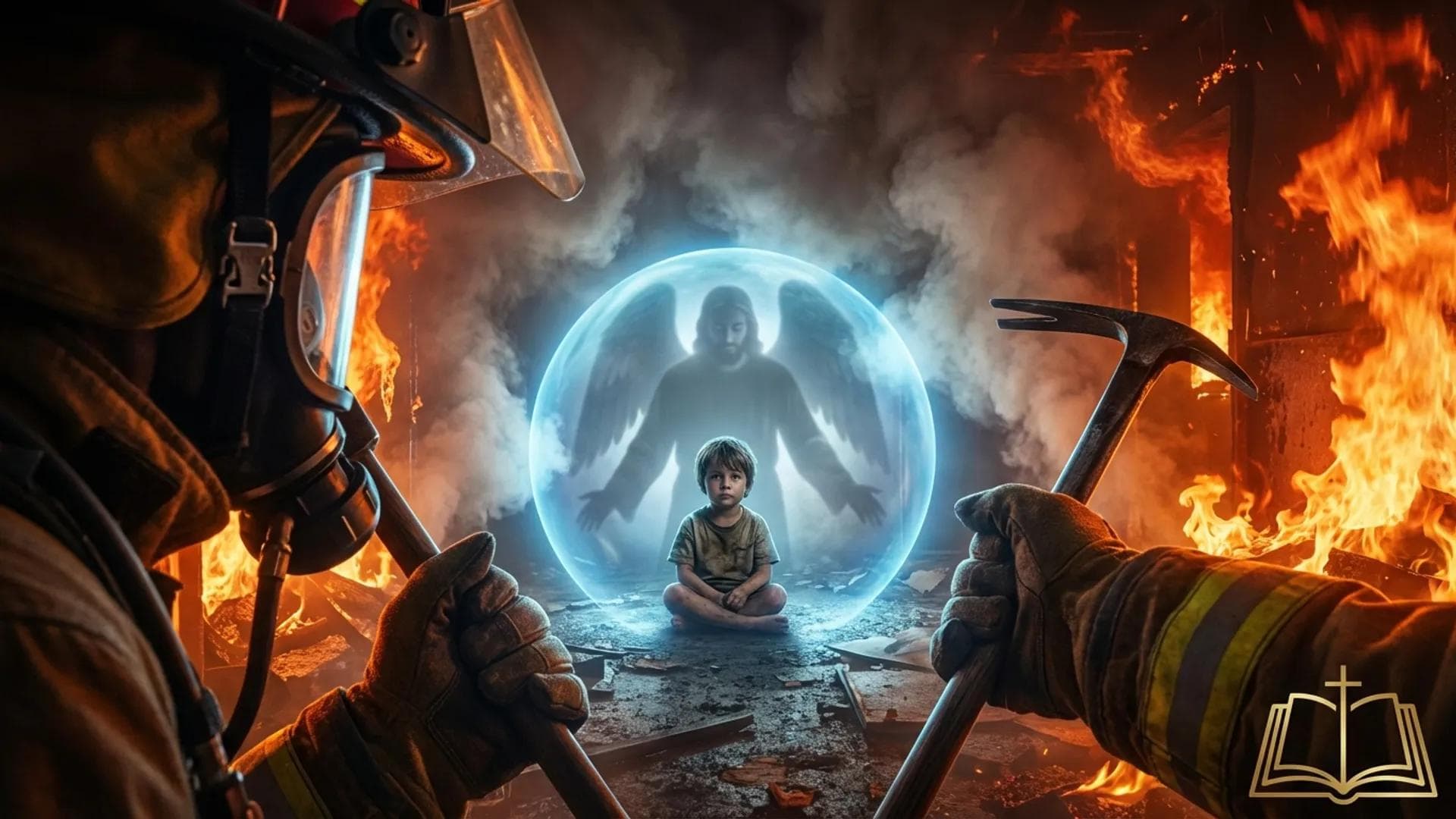
I checked my TIC. In a room that should have been flashing red and white (indicating temperatures exceeding 1,000°F), the display showed a static blue sphere in the corner.
- The Subject: A male child, approx. age 7, conscious and alert.
- The Environment: The floorboards, which had been vibrating from the fire load below, were still here.
- The Anomaly: The child was uninjured, displaying no signs of smoke inhalation or thermal burns.
I approached the victim to initiate a snatch-and-grab extraction. Standard protocol is rapid removal. However, the child was fixated on the empty corner of the room, adjacent to a load-bearing wall. Through my regulator, I tried to verbalize commands, but the boy remained stationary. He wasn't in shock; he was listening. He pointed to the empty space - where my TIC was registering a complete void of heat - and said, "Not yet. He says the beam is falling." In my line of work, we deal with structural integrity every day. I know the sound of wood groaning under torque. I heard nothing. Yet, the boy insisted on waiting. The sensation in that corner was tangible - a high-pressure density, like standing next to a massive subwoofer without the sound. It felt protective. When the boy finally nodded and said, "Run now," the atmospheric pressure lifted, the roar of the fire returned with deafening force, and we dove into the hallway.
Forensic Analysis: The Data Logs Do Not Lie
We cleared the structure seconds before the roof assembly failed. A steel I-beam, weighing several tons, sheared through the fourth floor, pulverizing the exact square footage where we had been standing in the bedroom. We made it to the street, achieving a successful rescue. The child was medically cleared with 100% oxygen saturation - impossible for someone trapped in a smoke-filled room for twenty minutes without breathing apparatus. But the "ghost story" aspect isn't what bothers me. It’s the hard data.
In the post-incident debriefing, the Battalion Chief pulled the SD card from my thermal camera for review. Modern TICs record telemetry data, not just video. We put the footage up on the monitors in the command post. The entire command staff went silent.
The Telemetry Report read as follows:
- Surrounding Fire Load: 1,240°F.
- The "Safe Zone" Bubble: 72°F constant.
- The Unidentified Signature: Standing directly beside the child's heat signature was a second thermal outline. It measured seven feet in height.
However, unlike a human signature which radiates heat (showing up as white/red), this signature absorbed heat. It appeared as absolute black on the infrared spectrum - colder than the surrounding air, colder than the room. It was an entropy sink. It stood exactly where the beam eventually landed, effectively holding a structural perimeter until we evacuated. I am a mechanic of fire; I understand flow paths, ventilation, and combustion. I do not have a chapter in my training manual for a 72-degree cold spot in the center of a blast furnace, nor for a seven-foot thermal void that saves lives. The camera doesn't hallucinate. The data logs exist. And that remains the only report I’ve never been able to file officially.