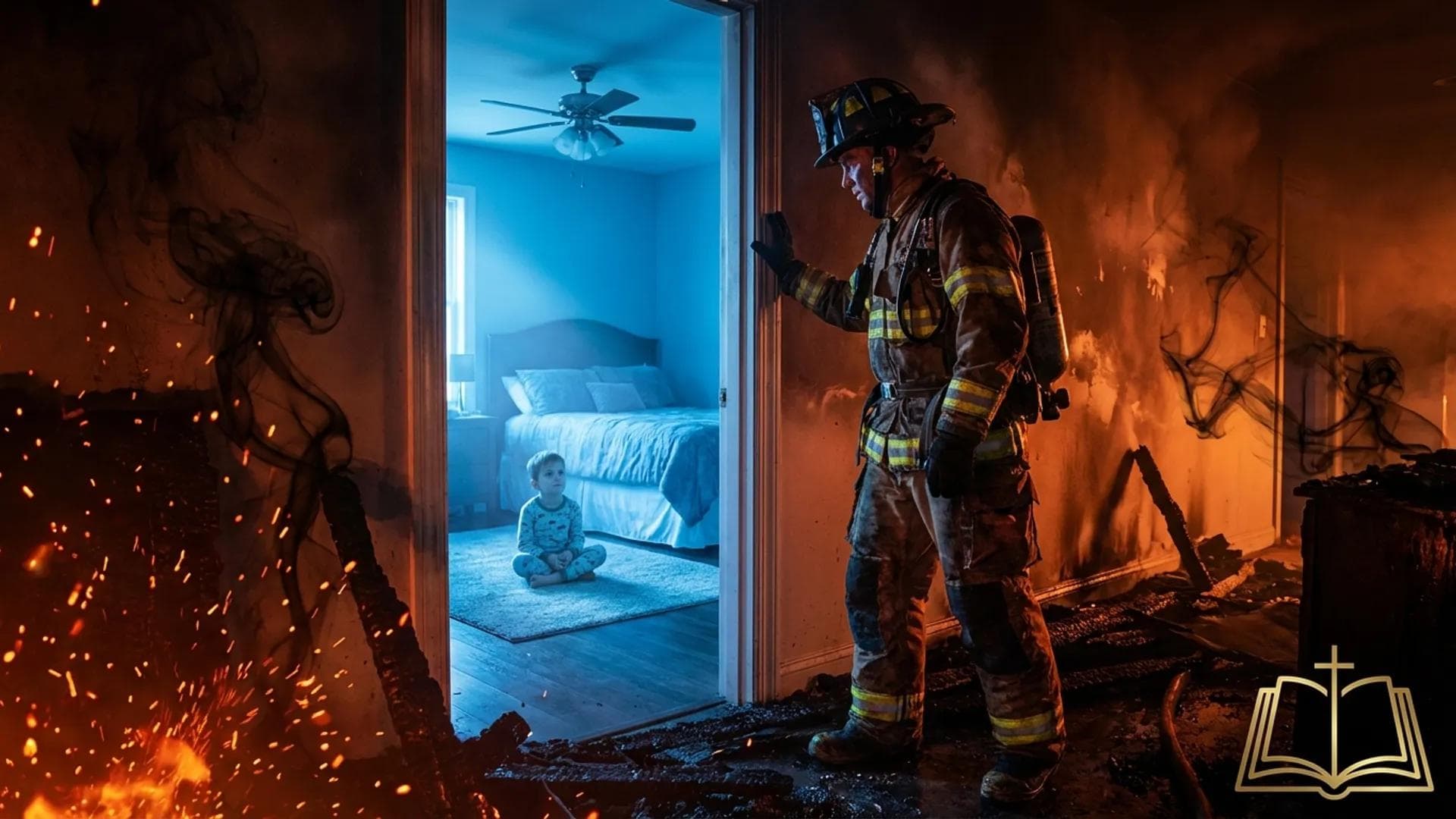
We were dispatched to a residential structure fire in the older district of the county. For those unfamiliar with the terminology, this area is comprised of balloon-frame construction. Built before modern fire codes, these homes lack firestops within the wall studs, meaning a fire in the basement can race to the attic in seconds, turning the walls into a series of chimneys.
The Scene Size-Up:
* Time: 0314 Hours
* Conditions: Heavy smoke showing, fully engulfed first floor.
* Strategy: Defensive. The structure was already compromised.
Standard Operating Procedures (SOPs) dictated we set up deck guns and drown it from the outside. The roof line was sagging - a telltale sign of imminent collapse. But the calculation changed the moment a civilian on the sidewalk grabbed my turnout gear. She wasn't just screaming; she was giving me a location. Back bedroom. Second floor. Six-year-old male.
In the fire service, we operate on a risk matrix: Risk a lot to save a lot. A confirmed life inside shifts the strategy from Defensive to Offensive Rescue, regardless of the structural stability. I signaled my partner, relying on two decades of instinct over the screaming logic of the situation, and we breached the side entry.
The Thermal Anomaly
The environment inside was what we call "IDLH" - Immediately Dangerous to Life and Health. My partner and I advanced up the stairwell, staying low. The heat was banking down, pushing temperatures at the ceiling well past 1,000 degrees. My gear is rated for high heat, but I could feel the radiant energy stinging through the layers.
At the top of the landing, my Thermal Imaging Camera (TIC) was washing out. The screen was a blur of red and white, indicating complete thermal saturation. We were seconds away from a flashover - where every combustible object in the room ignites simultaneously. We moved toward the back bedroom, operating purely on tactile navigation.
I reached the bedroom door. In a typical scenario, you check the door for heat with the back of a gloved hand to avoid a backdraft. It was hot. I kicked it in, dropping to a knee to stay under the exhaust path of the fire.
This is where my training fails to provide an explanation.
Crossing that threshold was like stepping out of a blast furnace and into a vacuum. The roaring decibels of the fire - the specific sound of timber snapping and oxygen being sucked into the combustion process - ceased instantly. It was replaced by a pressurized silence.
Conditions in the Bedroom:
* Temperature: Estimated 72 degrees Fahrenheit.
* Air Quality: Clear. No scent of combustion, burning drywall, or melting plastic.
* TIC Reading: The camera shifted from emergency reds to cool blues.
In the corner sat the boy, Leo. He wasn't coughing. He displayed no signs of hypoxia or smoke inhalation. He was calm. When he spoke, referencing a "tall man holding back the heat," I didn't have time to process the metaphysics of the statement. I only knew that my hair was standing on end, not from static electricity, but from a primal recognition that something violated the laws of nature here.
We grabbed the boy. The moment we exited that room and re-entered the hallway, the heat slammed back into us. We evacuated down the stairs, clearing the front porch exactly four seconds before the second-floor joists failed, collapsing the roof into the footprint of the house.
The Aftermath: Analysis and Safety Protocol
The paramedic report on Leo remains the most baffling document in my file. In a structure with that level of smoke production, we expect carbon monoxide (CO) levels in the blood to be lethal.
Patient Vitals:
* SpO2 (Oxygen Saturation): 100%
* CO Levels: 0%
* Airways: Clear, pink, no soot deposits.
The arson investigator, a man who relies strictly on burn patterns and accelerant traces, spent hours analyzing the debris the next day. The burn patterns confirmed that the fire had consumed the studs surrounding the door frame of that bedroom but had stopped abruptly at the threshold. There was no physical barrier. No fire-rated door. Just a line in the ash that the fire refused to cross.
While the "miraculous" nature of this event is what people latch onto, as a Fire Captain, I must pivot back to the practical lesson for homeowners. We often see rooms survive fires due to a simple habit: The closed door.
A closed bedroom door can hold back temperatures up to 900 degrees for a significant amount of time, protecting the oxygen levels inside. While Leo’s door was unrated and the physics of that night remain unexplainable to me, the principle remains: Close Before You Doze. It is the single most effective survival tactic for nocturnal fires.
I have spent twenty years fighting death with water, hydraulics, and strategy. I believe in training and equipment. But I also know that on rare occasions, there are variables standard operating procedures cannot account for. That night on 4th Avenue, the fire didn't lose to my hose line; it lost to something I can't put in an incident report. But if it gets you to check your smoke detectors and close your bedroom door tonight, then the story has served its purpose.