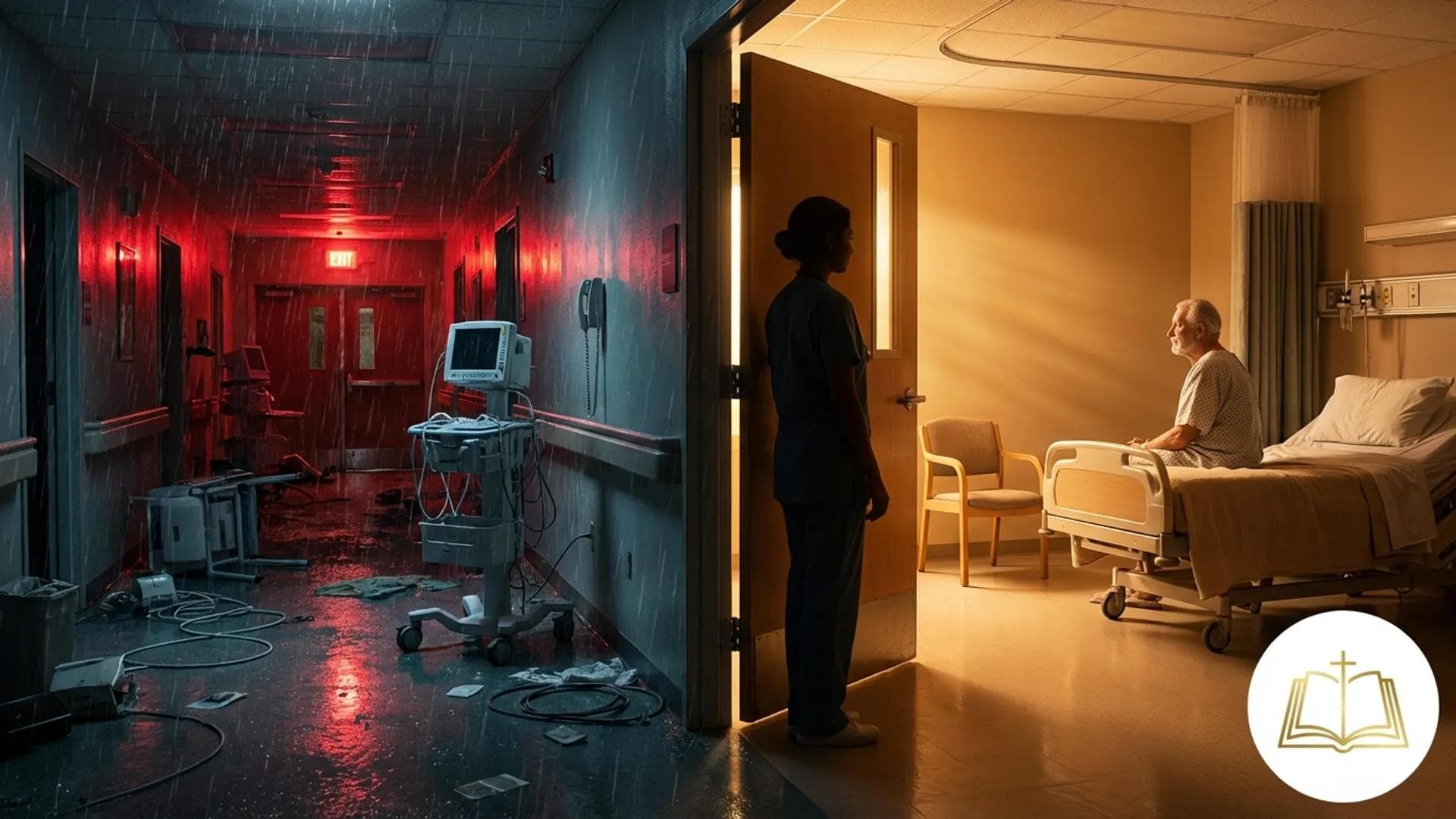
When Hurricane Michael made landfall in 2018, I was stationed at a Skilled Nursing Facility (SNF) in the Florida Panhandle, coordinating a Tier 3 evacuation. The media talks about the wind speed; they rarely discuss what happens when the infrastructure of medical care collapses. We weren’t just dealing with a Category 5 storm; we were dealing with a catastrophic failure of the facility’s automatic transfer switch, meaning the backup generators were spinning but delivering zero power to the life-safety systems. The North Wing, a 1970s addition to the building, was taking the brunt of the eyewall. My portable radio was screaming with traffic from the EOC (Emergency Operations Center), but my focus was strictly on START Triage protocols. We were moving patients based on survivability, and the structural integrity of Sector C was compromised. The roof membrane had delaminated, and water intrusion was turning the linoleum into an ice rink. I was checking SpO2 levels and tagging patients for transport when the ceiling grid in the main corridor buckled. We were operating on pure adrenaline and muscle memory, dragging non-ambulatory patients toward the firewall. That’s when I realized the count was off. We were missing the occupant of Room 412: Mr. Abernathy.
The Incident: Paradoxical Alertness and Atmospheric Stabilization
Mr. Abernathy was a palliative care patient, end-stage renal failure, charted as DNR/DNI (Do Not Resuscitate/Intubate). In the triage shuffle, he had been categorized as "Expectant" - a harsh reality in disaster medicine meaning resources are diverted to those with a higher probability of survival. I backtracked to the end of the hall, wading through two inches of standing water mixed with insulation and ceiling debris. The barometric pressure was so low my ears wouldn't clear, a physical symptom of the storm's intensity. I breached the fire door to Room 412, expecting to find a terrified, hypoxic patient amidst shattered glass.
Instead, I walked into a vacuum of silence. This wasn't a "feeling"; it was an observable shift in physics. The decibel level dropped from the deafening roar of 160 mph winds to a near-silent hum. My first instinct as a medic was to check for hypoxia-induced hallucinations, but the clinical signs were clear. The room was not only structurally intact, but the temperature was approximately 15 degrees warmer than the corridor.
- Terminal Lucidity: Mr. Abernathy, documented as non-verbal for six months with a GCS (Glasgow Coma Scale) of 9, was sitting upright. This is a phenomenon we occasionally see in hospice care known as terminal lucidity - a sudden, brief return of mental clarity before death.
- The Conversation: He wasn't looking at me. He was fixated on an empty corner. "She says to hold your position, son," he said. His speech was not dysarthric; it was clear.
- The anomaly: When I attempted to move toward the bed to check his radial pulse, I felt a physical resistance. It wasn't a ghost; it felt like walking into a high-pressure front.
Mr. Abernathy pointed to the empty chair. "Martha is bracing the load," he stated matter-of-factly. "We wait until the pressure equalizes." Against every protocol in my training, I didn't force the evac. I checked his vitals: pulse 60 and strong, respirations 16 and unlabored. For ten minutes, while the building tore itself apart outside, we sat in that hyper-stabilized pocket of air.
The Aftermath: Engineering Assessment and Mortality
The phenomenon ended as abruptly as a breaker tripping. The ambient noise returned, the pressure normalized, and Mr. Abernathy reclined, his respirations shifting immediately into a Cheyne-Stokes pattern (an abnormal breathing pattern indicative of approaching death). I transported him to the casualty collection point, but he expired within the hour - peaceful, dry, and without signs of trauma.
The true validation of this event didn't come from a chaplain, but from a structural engineer three days later. The facility was a total loss. The North Wing’s roof had suffered a total uplift failure.
However, the engineer’s report noted a statistical impossibility regarding Room 412:
- Moisture Readings: While adjacent rooms registered 90-100% moisture saturation in the drywall, Room 412 registered less than 12% - standard for a climate-controlled room.
- Glazing Integrity: The windows were single-pane glass, rated for 110 mph. They withstood gusts over 150 mph without shattering or blowing out, despite the negative pressure that should have sucked them from their frames.
- Debris Field: The dust on the windowsill was undisturbed.
The engineer categorized it as a "localized pressure anomaly," likely caused by wind shear creating a protective eddy. As a man of science and medicine, I accept the physics. But as a paramedic who has held the hands of a thousand dying patients, I know that the line between clinical reality and the inexplicable is thinner than we admit. Martha - whoever or whatever she was - held that ceiling up. I have the charts to prove it.