I spent the next hour fighting a losing battle against thermodynamics and entropy, utilizing every trick I had learned over a lifetime of trade work. I didn't just bang on the pipes; I performed a systematic, desperate diagnostic that left my knuckles bloody and raw. I stripped the intake assembly down to the threads, hoping to find a clog I could clear. Here is the checklist of desperation I ran through in that freezing dark:
* The Thermocouple: I tested the millivolts. It was dead cold. I tried to bypass the safety switch - a maneuver that could lose me my license - but desperation makes you do reckless things. It didn't matter; there was no fuel to ignite.
* The Regulator: I struck the diaphragm housing with the heavy end of my pipe wrench, a percussive attempt to unseat a stuck valve. The metal rang out like a church bell, but the gas didn't flow.
* The Electrical Leads: I checked the continuity on the thermostat wiring, praying for a break I could splice. The circuit was perfect. The machine was mechanically sound. It was simply starved.
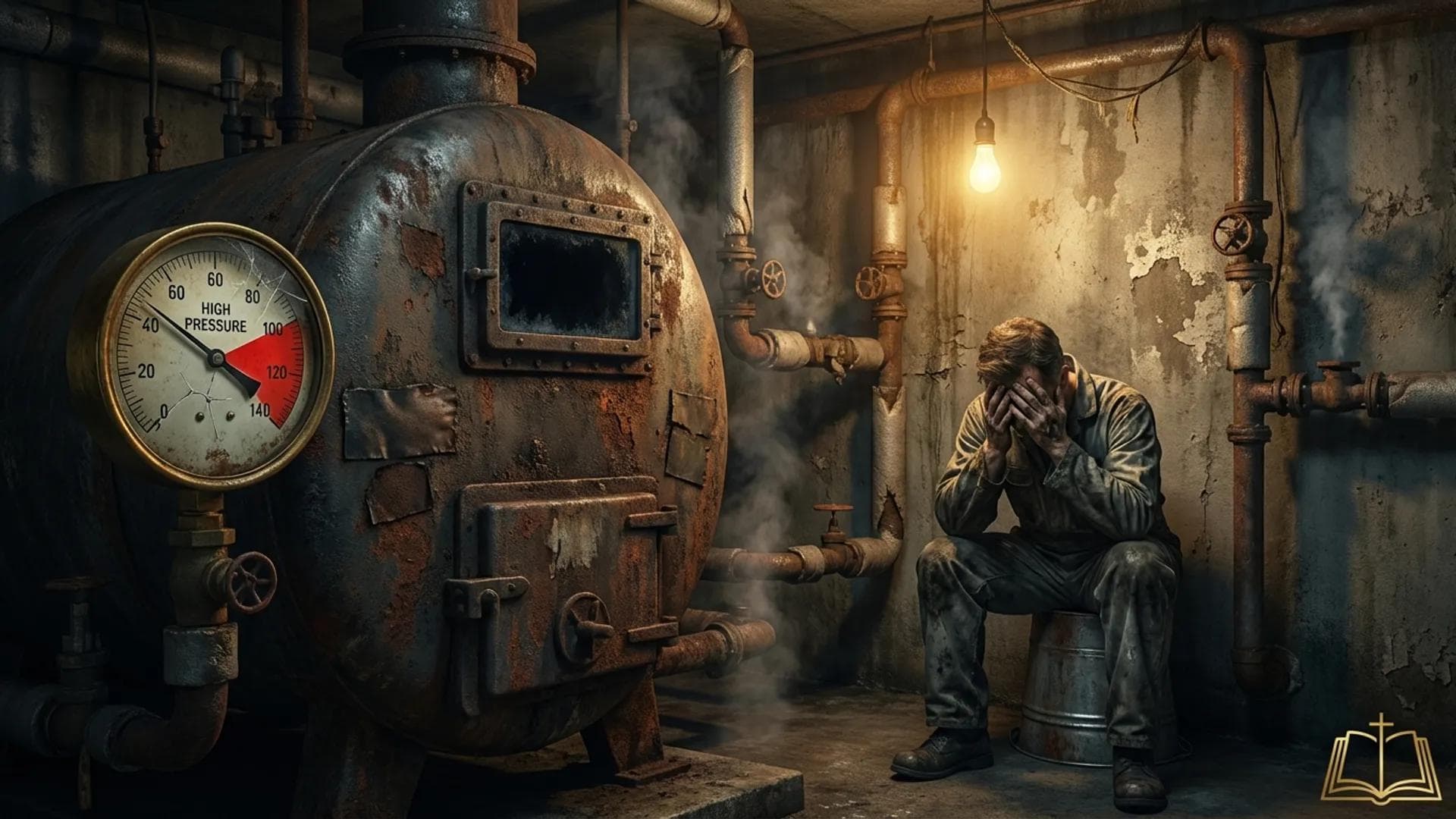
I sat down on an overturned joint compound bucket, the cold seeping through the rubber soles of my heavy work boots. Above me, floorboards creaked. I imagined Henderson reaching for his inhaler in the dark. I am not a religious man; you lose a lot of that faith when you spend your life patching drywall and unclogging sewage lines in a place where hope is in shorter supply than hot water. But sitting there, with the taste of rust and bitterness in my mouth, I felt a profound professional inadequacy. My one job was to protect these people from the elements, and I had failed. I closed my eyes, listening to the wind sound like a wolf trying to claw through the foundation, and decided I would wait ten minutes before making the walk upstairs to tell forty families they had to evacuate into the freezing night.
The change didn't happen with a bang or a spark; it defied every technical manual I have ever read. It started as a low resonance, a vibration like a plucked bass string that hummed through the concrete floor and into my boots. I opened my eyes. The pressure gauge on the boiler, which had been dead at zero, was trembling. I leaned in, squinting at the dial in the dim light of my flashlight. The pressure was rising. Ten PSI. Fifteen PSI. My mind raced through the impossibilities: The gas line is disconnected on the floor. The intake is shut. I stood up and placed my hand on the heavy iron outlet pipe that fed steam to the risers. It wasn't just room temperature; it was scalding hot. I snatched my hand back, adrenaline spiking. I looked through the mica inspection window into the firebox. It was pitch black. There was no blue flame, no orange glow, no roar of combustion. The firebox was cold, dark, and empty, yet the water inside the jacket was boiling violently. I could hear the steam hissing through the system, pushing its way up toward Mrs. Alvarez and Mr. Henderson. I walked around the machine three times, looking for a hidden electric bypass, a thermal runaway, anything that could explain where the energy was coming from. There was nothing. The machine was generating massive BTUs from a vacuum. I watched the gauge stabilize at the perfect operating pressure, the frost on the basement walls melting into rivulets. I didn't try to analyze it further. I didn't try to fix it. I just sat on my bucket in that impossible, radiant warmth, guarding a secret that physics couldn't explain. I never told a soul why I was weeping when the morning shift guy unlocked the door, but I know this: sometimes, the heat stays on because it simply has to.