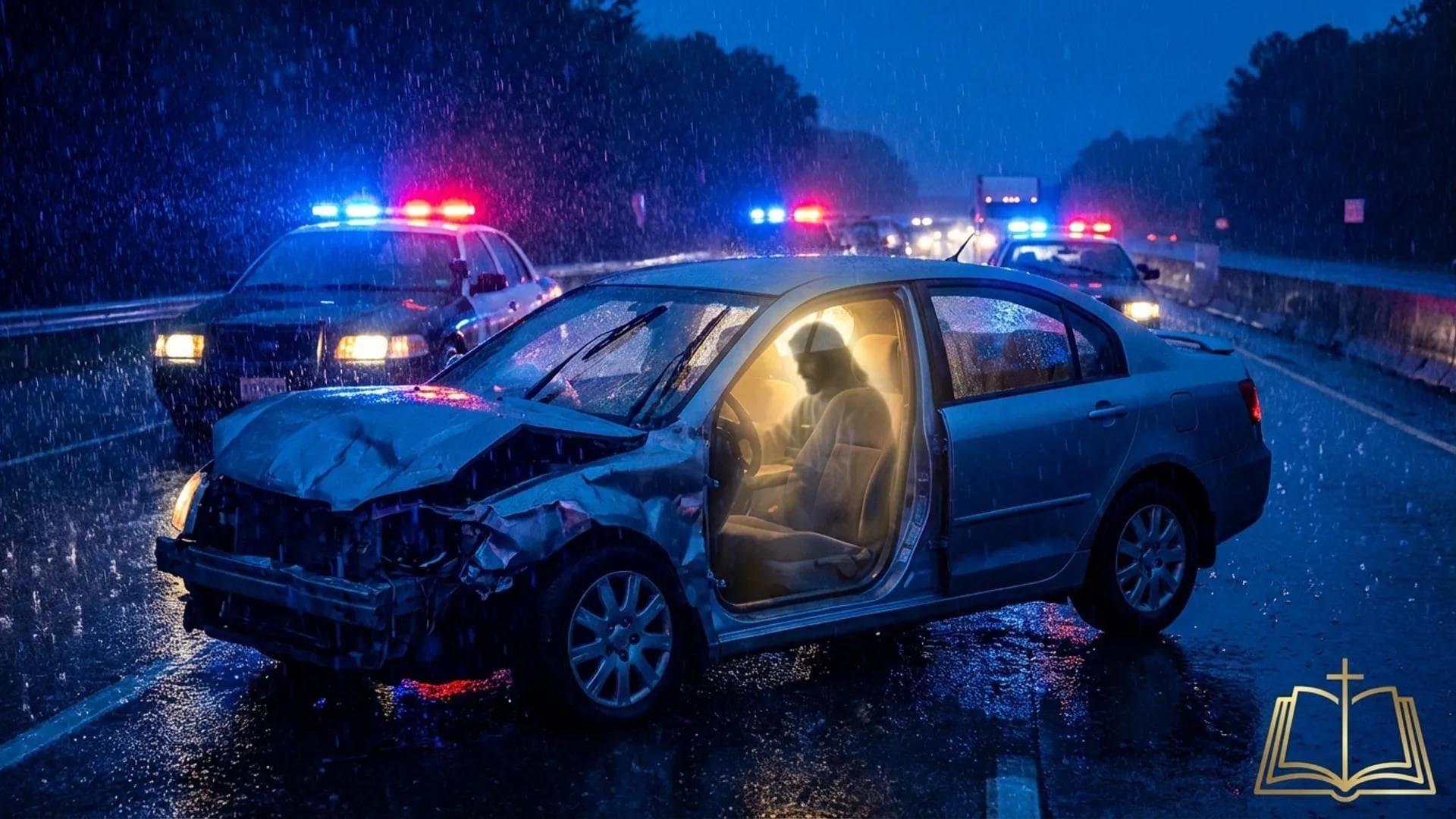
The approach to the vehicle was standard procedure, but the environmental factors were immediately inconsistent with the crash site. Usually, a scene like this is a cacophony of hissing air brakes, idling diesel engines, and wind noise. However, as I crossed the fog line toward the Honda, I experienced a localized auditory exclusion - a physiological response to high stress where the brain filters out background noise - but this felt distinct. The biting wind chill, which was hovering around 38 degrees, abruptly vanished within a ten-foot radius of the wreckage, replaced by a static thermal pocket. It wasn't spiritual; it felt electrical, like the air pressure change before a lightning strike. I shined my Streamlight into the cabin. The A-pillars were buckled, and the roof had collapsed downward, creating a survival space of less than twelve inches. Inside, the driver, a 22-year-old male, was pinned but conscious. His Glascow Coma Scale (GCS) appeared to be 15, which was medically impossible given the intrusion of the trailer into the cab. He wasn't in shock; he was fixated on the passenger seat. That area of the car had sustained catastrophic deformation; the steel roof was folded like origami into the footwell. Yet, the driver was speaking clearly to the empty, crushed space, murmuring about "holding the weight."
The extrication process took forty-five minutes once Fire & Rescue arrived with the Holmatro hydraulic cutters. The physics of the rescue baffled the battalion chief. The roof structure, which should have crushed the driver’s skull based on the sheer load of the loaded trailer, seemed to be suspended by a secondary force. Once we cut the pillars and rolled the dash, we extracted the driver. His injuries were limited to superficial lacerations and minor bruising from the seatbelt pre-tensioner. While the EMTs loaded him, I conducted the preliminary forensic sweep of the vehicle for the accident report. This is where the case moved from "lucky" to "unexplained." Inspecting the interior of the caved-in roof panel, directly above the passenger seat area, I found two distinct deformations in the high-strength boron steel. They were not impact crumples from the collision with the trailer. The metal was pushed outward - away from the passenger compartment - forming two indentations that perfectly matched the size and spread of large human hands. I photographed these marks (Evidence Photo #4A and #4B) before the tow crew separated the vehicles. The driver stated in his deposition that a "passenger" had braced the roof to keep it off him. While my report lists the cause of survival as "structural anomaly," those handprints remain the only piece of evidence in my career that I cannot explain with physics or engineering.
Safety Advisory: While this incident resulted in a miraculous survival, underride accidents are statistically fatal. Drivers are reminded to maintain a 4-second following distance in inclement weather and remain aware of tractor-trailer blind spots. Modern crumple zones are designed to absorb impact, but they cannot mitigate the intrusion of a trailer at highway speeds.