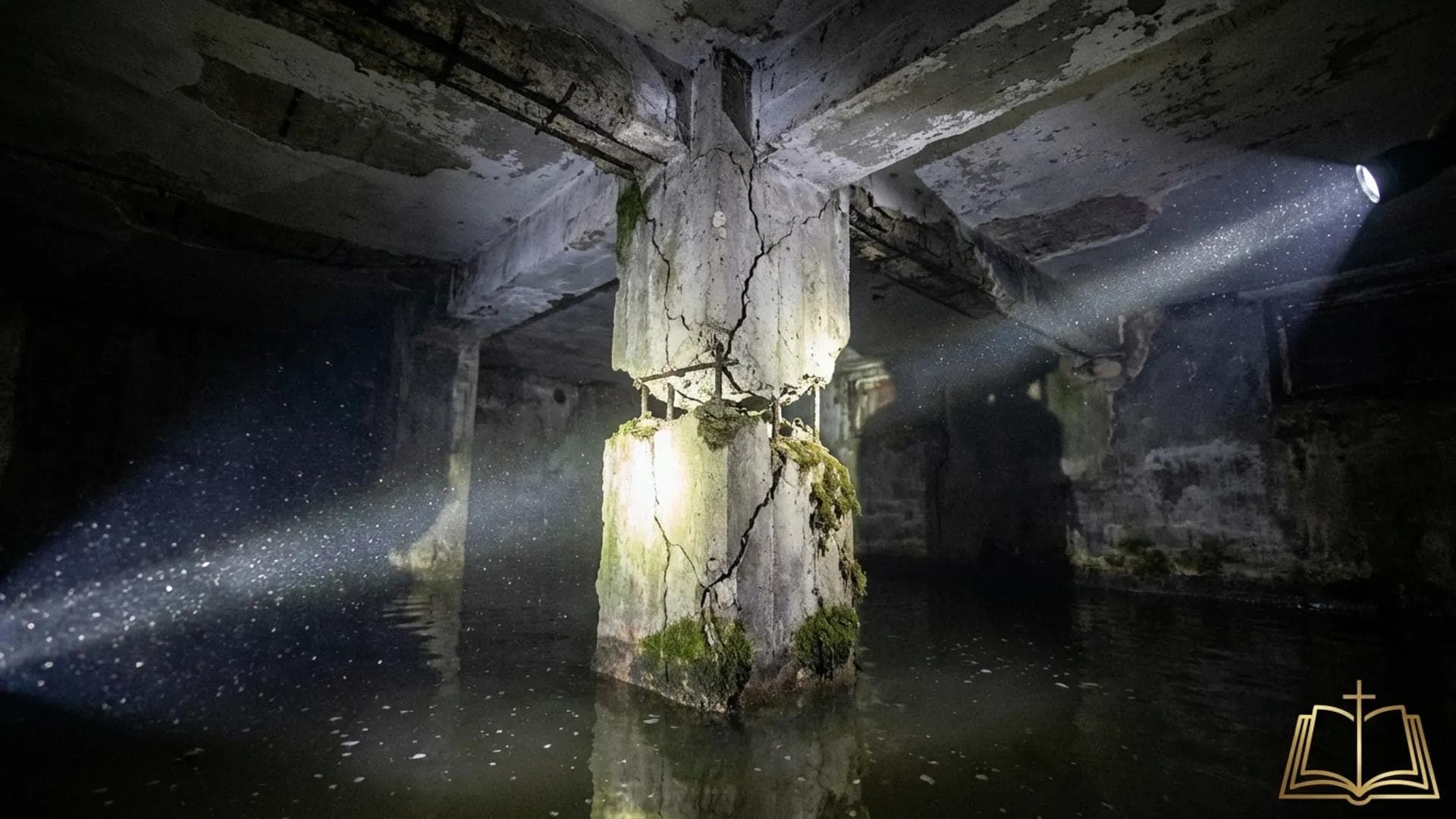
I stood in the basement, ankle-deep in freezing mud, conducting a rapid visual assessment of the main support column. What I saw was a textbook case of imminent structural failure. The gray pillar was exhibiting severe vertical spalling, and the internal rebar was exposed and buckling under the eccentric load. In engineering terms, the "path of load" had been severed. A building of that mass - five stories of brick and timber - transfers its weight down through the columns to the footings. Remove the footing, and the column becomes a pendulum. The fire captain was on the radio above, coordinating the evacuation of the third floor, but my watch told me they were out of time. The vibration from the pumps outside was accelerating the soil liquefaction. I calculated the dead load of the masonry above us against the remaining shear capacity of the compromised beam. The math was absolute: the structure had reached its plastic limit. It wasn’t a matter of if it would pancake; it was a matter of seconds.
The Anomaly: Temporary Load Redistribution via Arching Action
The sound of a building dying is specific; it starts with the groan of timber joists twisting out of their pockets, followed by the sharp report of snapping bolts. I watched the main beam shear clean through, leaving a visible six-inch gap between the concrete segments. At that moment, the load path was broken. According to every manual I have written or studied, the southeast corner should have instantly descended into the basement. I braced myself against the foundation wall, expecting the crushing weight of the collapse. Yet, the crash didn’t come. Instead, a heavy, inexplicable silence descended on the basement.
From a forensic engineering perspective, what likely occurred is a phenomenon known as extreme masonry arching. In rare instances, when a support is removed, the brick facade above can temporarily lock together due to friction and compression, creating a "false arch" that bridges the gap. However, for unreinforced masonry to hold five stories of dead load for a prolonged period without a lintel or beam is statistically impossible. For exactly twelve minutes - the precise time required for the captain to call the "all clear" - that building defied its own weight. There was no shaking, no dust falling, just a static suspension of mass. It wasn’t a supernatural presence; it felt like a suspension of kinetic energy, a momentary hiccup in the coefficient of friction. I stared at that sheared column, witnessing a load transfer that defied the calculated pounds per square inch (PSI) limits of the materials involved. It was a terrifying, silent display of physics operating on a margin of error that shouldn't exist.
Post-Failure Analysis and Early Detection Guidelines
As soon as the radio crackled with the confirmation that the civilians were clear, the physics corrected itself. The false arch failed. I scrambled through the bulkhead door seconds before the southeast corner imploded. The impact registered like a seismic event, sending a cloud of pulverized lime and plaster into the alleyway. The "miracle" was over, and gravity had collected its due. In the aftermath, we analyzed the debris field. The complete disintegration of the corner confirmed that the structure had been unsupported for those twelve minutes.
While we cannot rely on anomalies to save lives, we can rely on early detection. Foundation washouts are rarely instantaneous; they provide warning signs that every property owner and inspector must recognize. To prevent a tragedy like the Fourth Street collapse, you must monitor for the following structural distress signals:
- Stair-Step Cracking: Look for zigzag cracks in exterior brickwork or cinder blocks. This indicates differential settlement where one part of the foundation is sinking faster than the rest.
- Sticking Fenestration: When a foundation shifts, door frames and window sashes lose their squareness. If doors suddenly stick or windows won't open, the frame is racking.
- Chimney Separation: A chimney pulling away from the main structure is often the first indicator of footing failure.
- Water Management Issues: If you see water pooling near the foundation or smell persistent dampness in the crawlspace, assume hydraulic pressure is compromising the soil bearing capacity.
That night on Fourth Street taught me that while we can calculate risk, we cannot predict luck. However, relying on luck is not engineering. Rigorous inspection and respecting the signs of stress are the only ways to ensure the roof stays over your head.