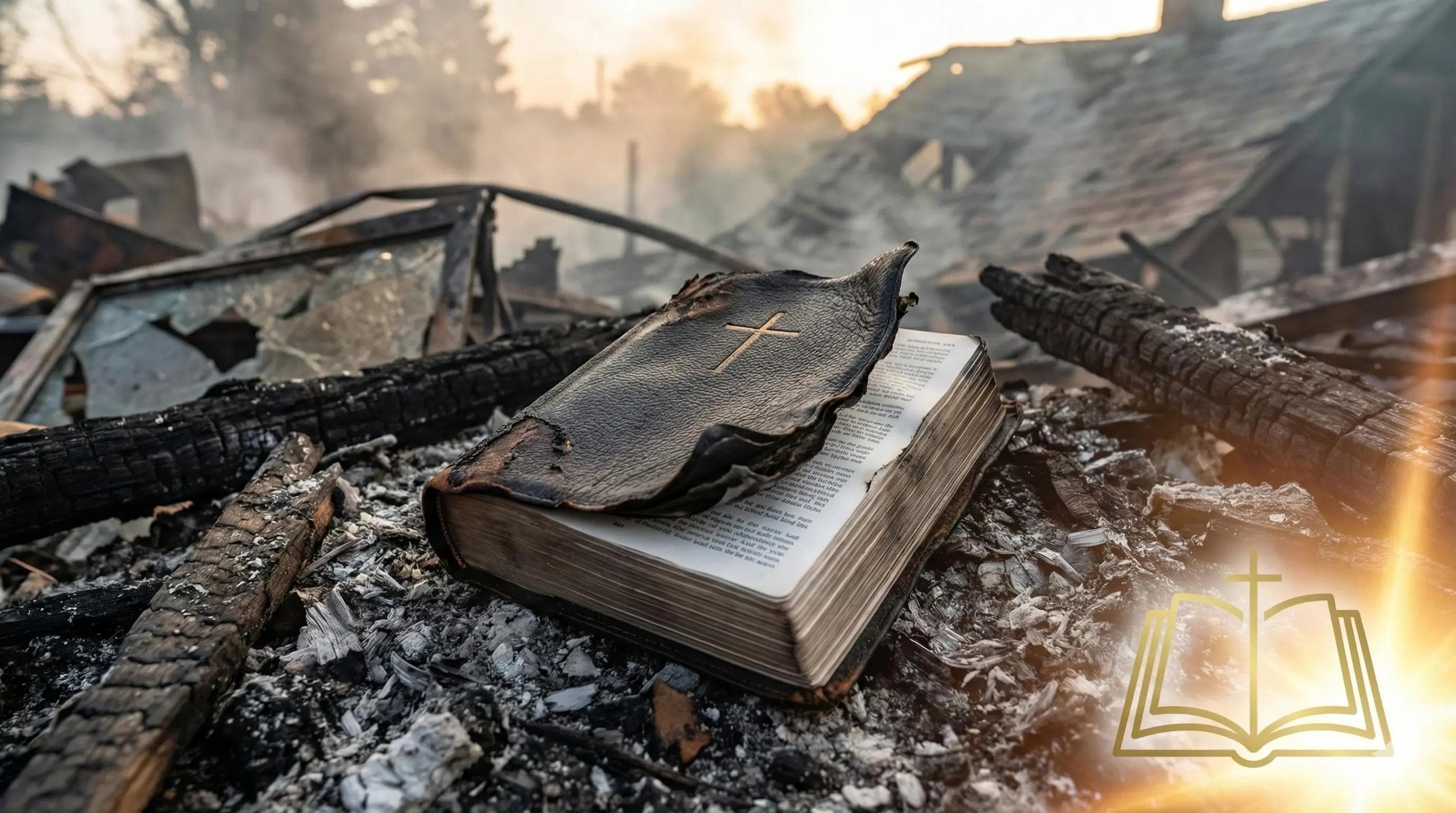
The following day, the fire marshal allowed us to enter the perimeter to assess the damage. This phase requires a steel stomach; the sensory experience of a burnout is overwhelming. It smells of wet soot, melted polymers, and something distinctively organic. As a science teacher, I understood the thermodynamics at play. The fire had burned hot and fast, creating a vacuum that imploded the windows and warped our stainless steel appliances into abstract art. We were crunching through the debris of the living room, looking for anything metal or ceramic, when I spotted it. Resting atop a pile of white ash - where a mahogany nightstand once stood - was a rectangular black brick. It was my grandmother’s King James Bible. The wood of the nightstand had vaporized. The lamp was a puddle of zinc. Yet, the book remained. I picked it up, expecting it to crumble. The leather cover was curled and singed, but the block of pages remained compressed and white. I opened it to the Psalms, the paper crisp and readable.
Now, I want to address this with the nuance it deserves. I have seen the viral stories about unburnt Bibles, and as an educator, I value critical thinking. There is a scientific explanation here: the "thermodynamics of the book." A closed hardcover book is dense; it lacks the oxygen circulation between pages required to sustain combustion, often leaving the inside unburned while the cover chars. That is the physics. But acknowledging the physics does not negate the spiritual impact of the moment. Finding that book gave me an anchor. It was a psychological turning point that shifted my mindset from "victim" to "survivor." However, hope alone does not rebuild a house. You need a plan.
In the months since the fire, I have had to learn a new curriculum: the bureaucracy of recovery. If you are reading this because you have suffered a similar loss, or if you simply want to be prepared, you must move past the emotional shock and treat recovery like a job. The Bible gave me the spiritual strength to keep going, but the following practical steps are what actually put a roof back over our heads:
- The "Memory Inventory" Method: Do not rely on your memory after the trauma. We used Google Street View and Zillow photos of our own house (from before we bought it) to jog our memory regarding what was in each room for the insurance claim. Without photo proof, insurance often defaults to the lowest value replacement.
* Secure the Site Immediately: We hired a fencing contractor within 24 hours. Looting is a sad reality in disaster zones. Protecting what is left of the foundation is your legal responsibility.
* Textile Restoration: We didn't know this existed, but specialist dry cleaners can remove the carcinogenic smoke particles from clothes that weren't burned. We saved 40% of our wardrobe this way.
* The "Loss of Use" Clause: Check your policy immediately for "ALE" (Additional Living Expenses). This covers your hotel and rental. We pushed our adjuster to approve a long-term rental house immediately, rather than staying in a cramped hotel, which was crucial for our mental health.
The unburnt Bible sits on my new mantle today. It is a conversation piece, yes, but mostly it is a reminder of dualities. It reminds me that life is fragile and flammable, but truth - and the resilience of the human spirit - is incredibly hard to destroy. We rebuilt. We recovered. And if the worst happens to you, know that you have the capacity to do the same.