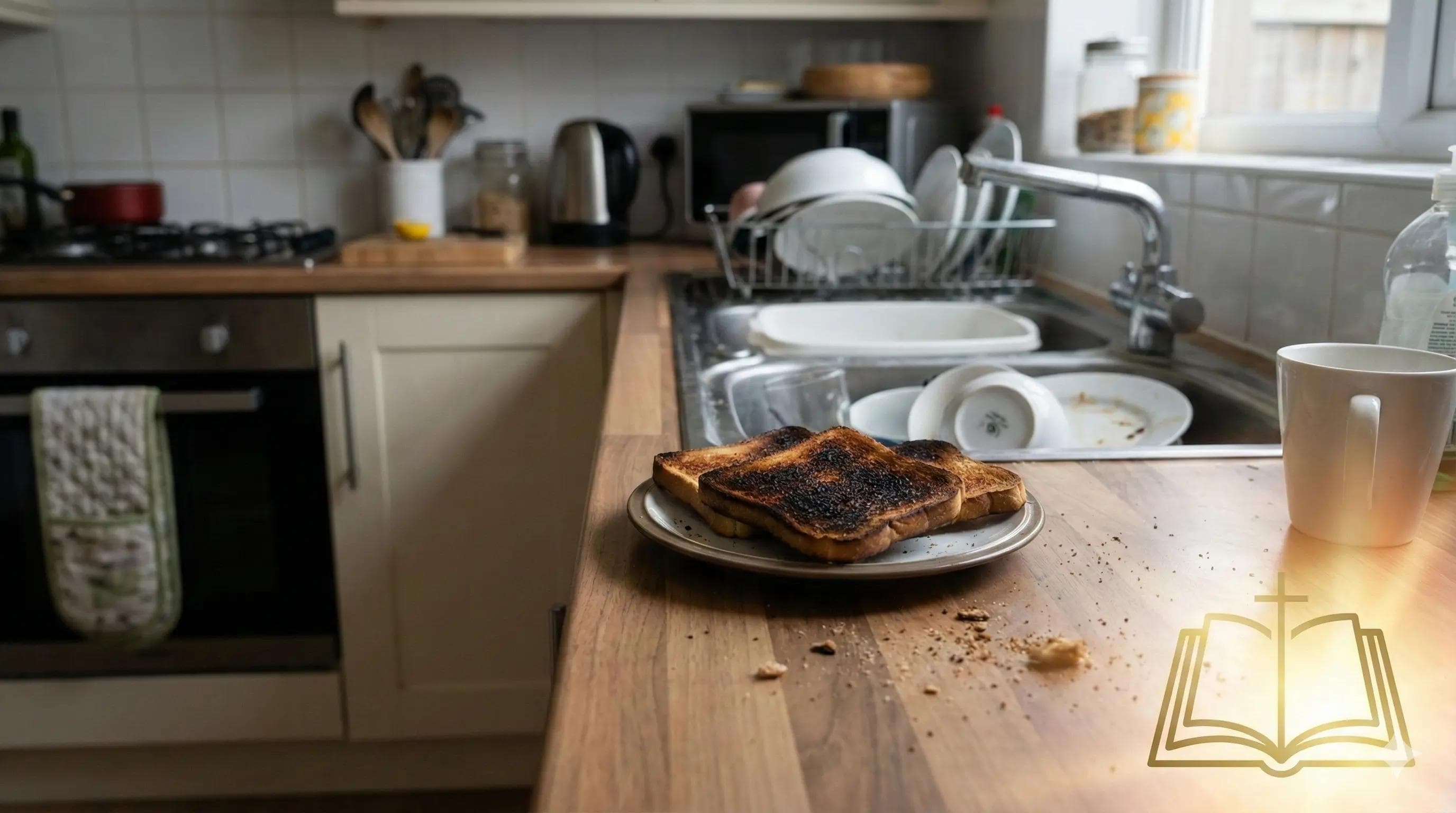
In that moment, standing amidst the sensory overload of a messy kitchen, I fell into the trap of believing that my spiritual standing was directly correlated to my domestic competence. I projected a "Transactional God" - a deity who operates on a clipboard system, checking off boxes for early rising, organic meal prep, and emotional regulation. By failing to toast bread correctly, I felt I had invalidated my witness. This is a common phenomenon I see in my practice: The Idolatry of Competence. We believe we must "clean up our act" (sanctification by works) before we can approach the Divine. I sat in the silence of the aftermath, convinced that my chaos had disqualified me from intimacy with God. I needed an external intervention to break this negative feedback loop, so I called my grandmother - not just for comfort, but for the wisdom of a woman who has practiced fifty years of faithful, lived theology.
My grandmother, acting as an informal spiritual director, listened to my catalogue of failures. She didn't offer platitudes. Instead, she offered a sharp theological correction regarding the Apostle Paul’s experience in 2 Corinthians 12:9. She dismantled my "performance theology" with a single question: "Esther, do you think God needs your perfection? He has His own. He is asking for your need." This forced me to perform an immediate exegesis of my own heart. Paul begged the Lord three times to remove his "thorn in the flesh" - his weakness. God’s refusal was not a punishment; it was a revelation of a different power dynamic. The Greek word for power here is dynamis, and the text suggests that this power reaches its teleological end - its perfection - specifically within the container of human weakness. I had been treating grace as a wage to be earned by the competent, rather than a hospital for the broken. My error wasn't burning the toast; my error was believing that a clean kitchen was a prerequisite for a holy life.
Clinical and Theological Application: The "Burnt Toast" Protocol
To move this from a philosophical concept to actionable behavior, I have developed a three-step protocol for myself and my clients to interrupt the cycle of shame when chaos inevitably occurs.
- Acknowledge the Somatic Signal: When you feel the physical rise of stress (the "Burnt Toast" moment), stop. Do not try to fix the situation immediately. Acknowledge that your fight-or-flight response is active because you feel your competence is being threatened. Name the feeling: "I am feeling shame because I am not in control."
- Theological Reframing: Remind yourself that God does not stand in the corner of the kitchen with a scorecard; He stands there with a plate. He is not looking for a curated presentation of your life. He enters into the chaos, not just the sanitized spaces. This is the doctrine of Imputed Grace - it covers the deficit.
- The Act of Acceptance: Physically scrape the toast. Butter it anyway. This acts as a liturgy of acceptance. Whisper the truth: "Your grace is sufficient for this mess." By eating the "imperfect" offering, you physically internalize the truth that you do not have to be perfect to be sustained.
Peace did not come from fixing the morning or magically un-burning the bread. It came from the radical acceptance that my weakness is not a barrier to God’s power, but the very location where it dwells.