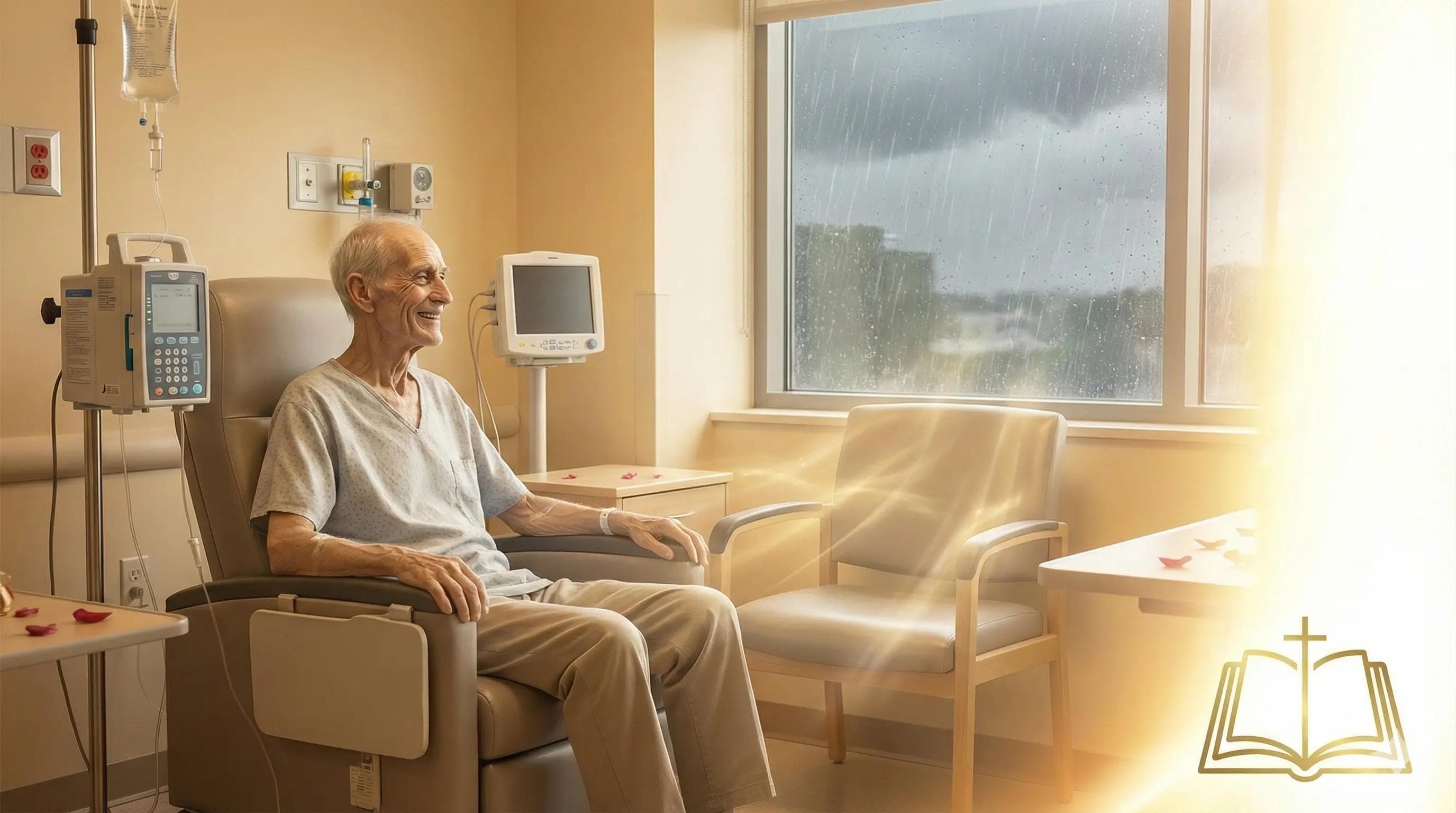
The distinct, acrid scent of chlorhexidine mixed with stale coffee is a sensory trigger you never quite wash out of your clothes after a shift at St. Jude’s Oncology Wing. It was October 14th, a Tuesday marked by a torrential downpour that battered the fourth-floor windows, mirroring the grim prognosis waiting in Bay 6. I have served as a lead hospice volunteer for over a decade, logging thousands of hours with patients transitioning from curative care to end-of-life comfort measures. My assignment was Mr. Abernathy, a 78-year-old retired engineer diagnosed with Stage 4 pancreatic adenocarcinoma. In my experience, this specific pathology is merciless; his chart confirmed metastasis to the liver, rapid cachexia (muscle wasting), and a pain management protocol suggesting his time was measured in hours, not days. The head nurse briefed me that the patient was exhibiting signs of terminal agitation - he was combative, isolated, and refusing spiritual counsel. As a trained volunteer, my protocol is strict: I reviewed my training on active listening and de-escalation techniques, preparing to enter a high-stress environment. I wasn't going in to save him; I was going in to provide a presence, a witness to his suffering so he wouldn't endure it alone. I carried a thermos of peppermint tea and a heavily highlighted copy of Architectural Digest - specific tools chosen to engage the analytical mind of an engineer consumed by mortality. As I walked down the corridor, dodging the bustling phlebotomy carts, I prepared myself for the usual heavy atmosphere of terminal oncology: the silence, the fear, and the sterile resignation. I expected a patient broken by the biology of his disease.
Section 2: The Anomaly in Bay 6 and The "Empty Chair" Phenomenon
The sensory experience of entering Bay 6 defied every clinical expectation I had formed in my years of service. Instead of the humid, stifling air typical of a room with closed windows and high-flow oxygen, the space was crisp, smelling faintly of ozone - reminiscent of the air after a lightning strike - and fresh roses, a direct violation of the strict "no fresh flowers" policy in the immunocompromised ward. Mr. Abernathy was not slumped in a morphine haze as his chart predicted. He was sitting upright at a 45-degree angle, his vitals monitor displaying a resting heart rate of 72 bpm, remarkably low for a patient previously documented in acute distress. The transformation was physical; his skin, previously described as jaundiced and grey due to hepatic failure, held a distinct flush of color. But it was the interaction in the room that stopped me cold. He was looking at the empty vinyl recliner beside his bed, nodding intently as if listening to a complex argument. When he noticed me, his clarity was absolute. "Pull up a stool, son," he said, his voice resonant and free of the "death rattle" usually present at this stage. "This chair is taken." I looked at the empty seat. Visually, it was vacant. Physiologically, however, I reacted as if I were in the presence of high voltage. I experienced immediate piloerection (goosebumps), and a sudden, intense warmth flushed through my chest - a somatic marker often reported in cases of profound spiritual experiences in clinical settings. Mr. Abernathy explained, with the casual demeanor of an engineer discussing a blueprint, that his visitor was walking him through "the garden" that awaited him. He described the visitor not with religious platitudes, but with specific, tangible details about the absence of pain shadows.
Section 3: Post-Event Analysis and Spontaneous Regression
The aftermath of that Tuesday challenges the rigid dichotomy we often draw between medical science and unquantifiable phenomena. For the next hour, I sat as a silent observer, documenting the event not in a medical file, but in my personal journal, noting that Mr. Abernathy’s agitation - documented for weeks by nursing staff - had vanished entirely without an increase in palliative sedation. Two weeks later, the clinical data caught up with the experience. I approached Dr. Henderson, the attending oncologist, expecting to sign the bereavement condolence card. Instead, he shoved a clipboard into my hands, pointing at the comparative CT scans. "Look at the hepatic lesions," he said, his voice tight with confusion. The tumors hadn't just stopped growing; they were exhibiting signs of necrosis and recession. In medical literature, this is termed Spontaneous Regression - a statistical anomaly estimated to occur in roughly 1 out of every 100,000 cancer cases. While the medical team scrambled for a biological explanation - debating delayed immunotherapy responses or hormonal shifts - I knew the data was incomplete without the context of that Tuesday afternoon. Mr. Abernathy didn't just experience a "mood lift"; he experienced a physiological shift triggered by a presence that medicine cannot quantify. He lived another 14 months, pain-free, eventually passing in his sleep at home. My takeaway for anyone working in palliative care is this: Treat the charts, but respect the room. There are medicines we administer via IV, and there are medicines that walk through closed doors when all hope is lost. We must be humble enough to acknowledge both.